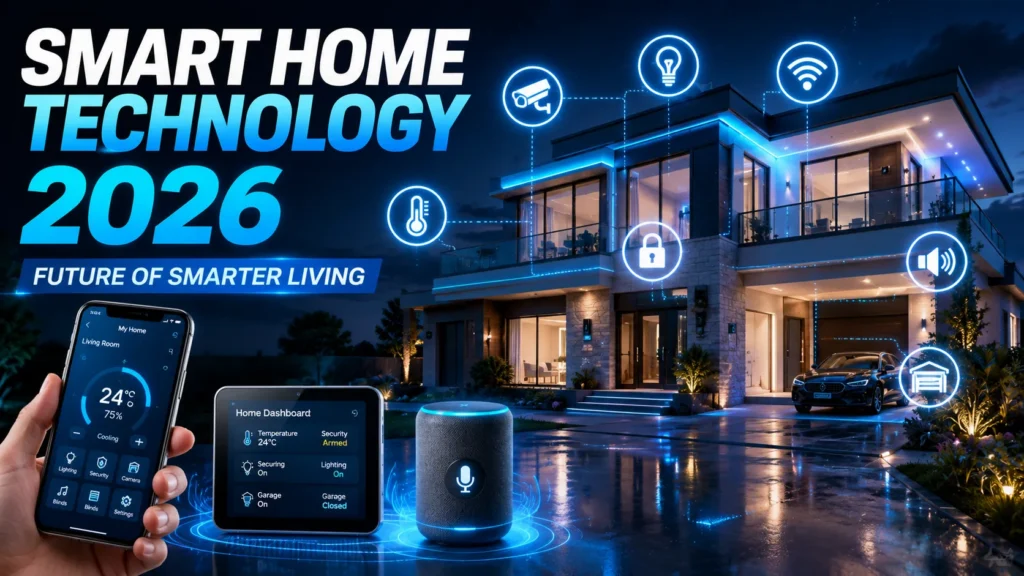
Smart Home Technology is transforming the way people live, work, and interact with their homes. From voice-controlled lighting and intelligent security systems to automated climate control and energy management, smart homes offer convenience, efficiency, security, and comfort like never before.
As technology continues to evolve, smart home devices are becoming more affordable and accessible, making them a popular choice for homeowners worldwide. In this comprehensive guide, we’ll explore everything you need to know about smart home technology, its benefits, key devices, challenges, and future trends.
What Is Smart Home Technology?
Smart Home Technology refers to a network of connected devices and systems that communicate through the internet, allowing homeowners to monitor, control, and automate various household functions remotely.
These devices use technologies such as:
- Internet of Things (IoT)
- Artificial Intelligence (AI)
- Machine Learning
- Wireless Communication
- Cloud Computing
By integrating these technologies, smart homes can automate daily tasks and improve overall quality of life.
How Smart Home Technology Works
Smart home systems connect devices through a central hub, smartphone application, or voice assistant. Users can control devices manually or create automated routines based on specific conditions.
For example:
- Lights turn on when someone enters a room.
- Thermostats adjust temperatures automatically.
- Security cameras send alerts when motion is detected.
- Smart locks allow remote access to visitors.
This interconnected ecosystem creates a seamless and efficient living environment.
Key Components of a Smart Home
Smart Lighting Systems
Smart lighting allows users to control brightness, color, and schedules remotely.
Benefits include:
- Energy savings
- Improved ambiance
- Remote control access
- Automated scheduling
Popular features include motion sensors and voice commands.
Smart Thermostats
Smart thermostats learn user preferences and automatically optimize heating and cooling.
Advantages:
- Lower energy bills
- Increased comfort
- Remote temperature management
- Eco-friendly operation
Smart Security Systems
Security is one of the biggest reasons homeowners adopt smart home technology.
Common devices include:
- Smart cameras
- Video doorbells
- Motion detectors
- Smart locks
- Alarm systems
These devices provide real-time monitoring and instant alerts.
Smart Home Assistants
Voice assistants serve as the command center of many smart homes.
Examples include:
- Amazon Alexa
- Google Assistant
- Apple Siri
Users can control multiple devices through simple voice commands.
Smart Appliances
Modern appliances are becoming increasingly intelligent.
Examples:
- Smart refrigerators
- Smart washing machines
- Smart ovens
- Robot vacuum cleaners
These devices improve convenience and automate routine household tasks.
Benefits of Smart Home Technology
Enhanced Convenience
One of the biggest advantages of smart home technology is convenience. Users can control various devices from a smartphone or through voice commands.
Improved Energy Efficiency
Smart devices help reduce unnecessary energy consumption by optimizing usage patterns.
Examples include:
- Automated lighting schedules
- Intelligent thermostat controls
- Energy monitoring systems
Better Home Security
Advanced security features provide peace of mind through:
- Live video monitoring
- Motion detection
- Remote locking and unlocking
- Emergency alerts
Cost Savings
Although the initial investment can be significant, smart homes often reduce long-term expenses through energy efficiency and preventive maintenance.
Increased Property Value
Homes equipped with modern smart technologies often attract buyers and command higher market values.
Popular Smart Home Devices in 2026
The most widely used smart home devices include:
- Smart Speakers
- Smart Thermostats
- Smart Security Cameras
- Video Doorbells
- Smart Plugs
- Smart Locks
- Smart Lighting Systems
- Robot Vacuum Cleaners
- Smart Smoke Detectors
- Smart Home Hubs
These devices continue to gain popularity due to their practicality and affordability.
Challenges of Smart Home Technology
While smart homes offer numerous benefits, there are challenges to consider.
Privacy Concerns
Connected devices collect large amounts of user data, raising concerns about privacy and data security.
Cybersecurity Risks
Poorly secured devices may become targets for hackers.
Best practices include:
- Strong passwords
- Two-factor authentication
- Regular firmware updates
- Secure Wi-Fi networks
Compatibility Issues
Not all devices work seamlessly together. Choosing products that support common smart home standards can help avoid integration problems.
Initial Setup Costs
Creating a fully automated home can require a significant upfront investment.
However, many homeowners gradually build their smart ecosystem over time.
Future Trends in Smart Home Technology
The future of smart home technology looks incredibly promising.
Artificial Intelligence Integration
AI-powered systems will become more predictive and personalized, automatically adapting to user behavior.
Advanced Energy Management
Future homes will optimize energy usage using renewable sources, battery storage, and intelligent power management.
Enhanced Voice Recognition
Voice assistants will understand natural language more accurately and perform increasingly complex tasks.
Smart Health Monitoring
Emerging devices will monitor health metrics and provide proactive wellness recommendations.
Greater Interconnectivity
Improved communication standards will enable seamless interaction among devices from different manufacturers.
How to Build a Smart Home
If you’re new to smart home technology, start with these steps:
Step 1: Choose a Smart Ecosystem
Select a primary platform such as:
- Amazon Alexa
- Google Home
- Apple HomeKit
Step 2: Start with Essential Devices
Begin with:
- Smart lights
- Smart plugs
- Smart speakers
Step 3: Add Security Features
Install:
- Smart cameras
- Smart locks
- Video doorbells
Step 4: Create Automation Routines
Automate common tasks such as:
- Morning routines
- Bedtime schedules
- Energy-saving modes
Step 5: Expand Gradually
Add additional devices based on your needs and budget.
Why Smart Home Technology Is Important
Smart home technology is more than a trend; it represents the future of modern living. By combining automation, connectivity, artificial intelligence, and energy efficiency, smart homes improve convenience, safety, and sustainability.
As technology continues to advance, smart homes will become even more intelligent, adaptive, and accessible, making them an essential part of everyday life.
Conclusion
Smart Home Technology is revolutionizing residential living by creating safer, more efficient, and highly connected homes. From intelligent security systems and smart lighting to AI-powered assistants and automated appliances, the possibilities continue to expand.
Whether you’re looking to improve convenience, reduce energy costs, enhance security, or increase property value, investing in smart home technology can deliver significant long-term benefits. As innovation accelerates, smart homes will play an increasingly important role in shaping the future of modern living.