The electric vehicle (EV) industry is growing faster than ever, creating thousands of opportunities for skilled professionals worldwide. Among the most in-demand roles is that of an EV Technician. As automakers continue shifting toward electric mobility, businesses need trained technicians who can inspect, diagnose, repair, and maintain electric vehicles safely and efficiently.
If you’re considering a career in the EV industry, this guide covers everything you need to know about EV technician jobs, including salary expectations, required skills, qualifications, certifications, job responsibilities, and future career growth.
What Is an EV Technician?
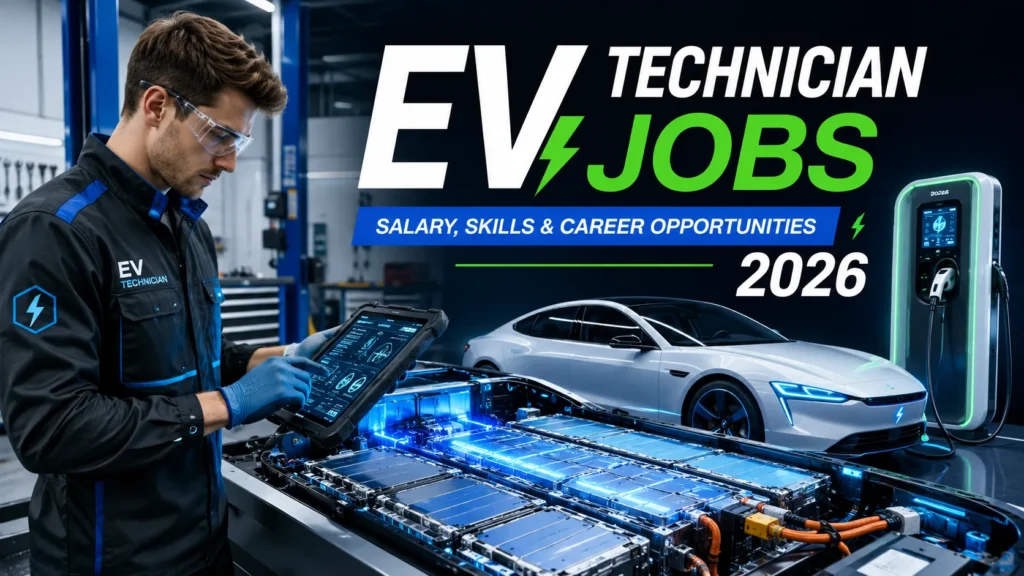
An EV Technician is a specialized automotive professional who works on electric vehicles instead of traditional gasoline-powered cars. Their primary responsibility is maintaining and repairing electrical systems, battery packs, charging systems, power electronics, and electric drivetrains.
Unlike conventional mechanics, EV technicians must understand high-voltage systems, battery management technology, and advanced vehicle software diagnostics.
What Does an EV Technician Do?
The daily responsibilities of an EV technician can vary depending on the employer and specialization.
Diagnose Electric Vehicle Problems
Technicians use advanced diagnostic software to identify electrical faults, battery issues, and software-related problems.
Inspect and Repair EV Batteries
Battery systems are the most critical component of electric vehicles. Technicians test battery health, replace defective modules, and ensure optimal performance.
Maintain Charging Systems
Charging ports, onboard chargers, and charging infrastructure require regular inspection and maintenance.
Perform Software Updates
Modern EVs rely heavily on software. Technicians frequently update vehicle systems to improve performance and security.
Follow High-Voltage Safety Procedures
Working with EVs involves handling dangerous high-voltage components. Safety compliance is a major part of the job.
Why EV Technician Jobs Are in High Demand
The demand for EV technicians continues to increase because of several major industry trends.
Rapid Growth of Electric Vehicles
Governments and manufacturers are investing billions into electric mobility, resulting in a growing EV market.
Shortage of Skilled Workers
There are currently fewer trained EV technicians than available job openings in many regions.
Expansion of EV Charging Networks
As charging infrastructure expands, employers need technicians to install and maintain charging equipment.
Fleet Electrification
Delivery companies, public transportation providers, and logistics firms are rapidly adopting electric fleets.
These factors make EV technician careers one of the most future-proof options in the automotive industry.
Skills Required for EV Technician Jobs
Employers look for both technical and practical skills when hiring EV technicians.
Technical Skills
- Electric vehicle diagnostics
- Battery management systems
- Electrical troubleshooting
- High-voltage system repair
- Charging station maintenance
- Automotive electronics
- EV software diagnostics
- Power electronics knowledge
Soft Skills
- Problem-solving
- Communication
- Attention to detail
- Safety awareness
- Time management
- Team collaboration
Candidates with strong electrical knowledge often have a competitive advantage in the job market.
Educational Requirements for EV Technician Careers
Most employers require at least a high school diploma or equivalent. However, candidates with specialized automotive education are often preferred.
Common educational pathways include:
- Automotive Technology Diploma
- EV Technology Certification Programs
- Electrical Engineering Technician Courses
- Automotive Service Technician Training
- Technical Apprenticeships
Hands-on experience remains one of the most valuable qualifications for employers.
Best Certifications for EV Technicians
Professional certifications can significantly improve employment opportunities and earning potential.
Electric Vehicle Service Certification
Validates practical EV maintenance and repair skills.
High Voltage Safety Certification
Demonstrates competency in working with high-voltage systems safely.
Automotive Electrical Systems Certification
Focuses on electrical diagnostics and advanced troubleshooting.
Manufacturer-Specific EV Certifications
Many EV manufacturers offer specialized training programs for their vehicles.
Certified technicians are often prioritized during recruitment and promotion decisions.
EV Technician Salary in 2026
Salary levels vary depending on experience, location, certifications, and specialization.
Entry-Level EV Technician Salary
Professionals entering the field can expect competitive starting salaries and strong growth potential.
Mid-Level EV Technician Salary
Experienced technicians with several years of hands-on expertise generally earn significantly higher compensation.
Senior EV Technician Salary
Specialists in battery diagnostics, advanced electrical systems, and fleet maintenance often receive premium salaries and leadership opportunities.
Additional certifications and manufacturer training can further increase earning potential.
Types of EV Technician Jobs
The EV industry offers multiple career paths.
Electric Vehicle Service Technician
Focuses on vehicle maintenance, diagnostics, and repairs.
EV Battery Technician
Specializes in battery testing, refurbishment, and replacement.
Charging Station Technician
Installs and maintains EV charging infrastructure.
Fleet EV Technician
Maintains electric buses, delivery vans, and commercial vehicles.
High Voltage Technician
Works specifically with advanced electrical systems and power electronics.
Manufacturing EV Technician
Supports production, testing, and quality assurance within manufacturing facilities.
Each specialization offers unique career growth opportunities.
Industries Hiring EV Technicians
Several industries actively recruit EV professionals.
Automotive Manufacturers
Vehicle manufacturers require technicians for production and service operations.
Dealership Service Centers
Dealerships need trained professionals to maintain growing EV inventories.
Public Transportation
Electric buses and transit systems require ongoing maintenance support.
Logistics and Delivery Companies
Fleet electrification is creating thousands of technician positions worldwide.
Charging Infrastructure Companies
Charging network operators hire technicians for installation and maintenance work.
Energy and Utility Companies
Utilities expanding EV programs increasingly seek technical talent.
How to Become an EV Technician
Entering the industry requires a combination of education, training, and practical experience.
Step 1: Learn Automotive Fundamentals
Develop a strong foundation in automotive systems and vehicle repair.
Step 2: Complete EV Training
Enroll in specialized electric vehicle technology programs.
Step 3: Obtain Relevant Certifications
Earn industry-recognized credentials that demonstrate expertise.
Step 4: Gain Hands-On Experience
Work through internships, apprenticeships, or entry-level technician positions.
Step 5: Continue Developing Skills
The EV industry evolves rapidly, making ongoing education essential.
Future Outlook for EV Technician Jobs
The long-term outlook for EV technician careers remains extremely positive. As governments implement stricter emissions regulations and consumers increasingly choose electric vehicles, demand for qualified EV technicians is expected to grow substantially.
Technicians who develop expertise in battery systems, diagnostics, charging infrastructure, and software troubleshooting will likely have the strongest career prospects over the next decade.
Frequently Asked Questions
Are EV technician jobs worth pursuing?
Yes. EV technician jobs offer strong demand, competitive salaries, and long-term career stability.
Do EV technicians earn more than traditional mechanics?
In many cases, yes. Specialized EV skills can command higher compensation.
What qualifications are needed to become an EV technician?
Most employers prefer automotive training, EV-specific education, certifications, and practical experience.
Is there a shortage of EV technicians?
Yes. Many regions currently face a shortage of qualified EV professionals.
What industries hire EV technicians?
Automotive manufacturers, dealerships, charging infrastructure providers, logistics companies, utility firms, and public transportation organizations all hire EV technicians.
Conclusion
EV technician jobs represent one of the fastest-growing career opportunities in the automotive and clean energy sectors. As electric vehicles continue to dominate the future of transportation, demand for qualified technicians will remain strong.
Professionals who invest in EV training, certifications, and hands-on experience can position themselves for long-term success, attractive salaries, and excellent career growth. Whether you’re starting your career or transitioning from traditional automotive repair, becoming an EV technician is a smart move in the rapidly evolving electric vehicle industry.