Cybersecurity has become one of the fastest-growing fields in the technology industry. As businesses, governments, and individuals rely more on digital systems, the need for cybersecurity professionals continues to increase.
Many people believe cybersecurity is only for experts with years of experience, but there are several entry-level roles designed for beginners. With the right skills, training, and practical knowledge, newcomers can start building a successful career in this field.
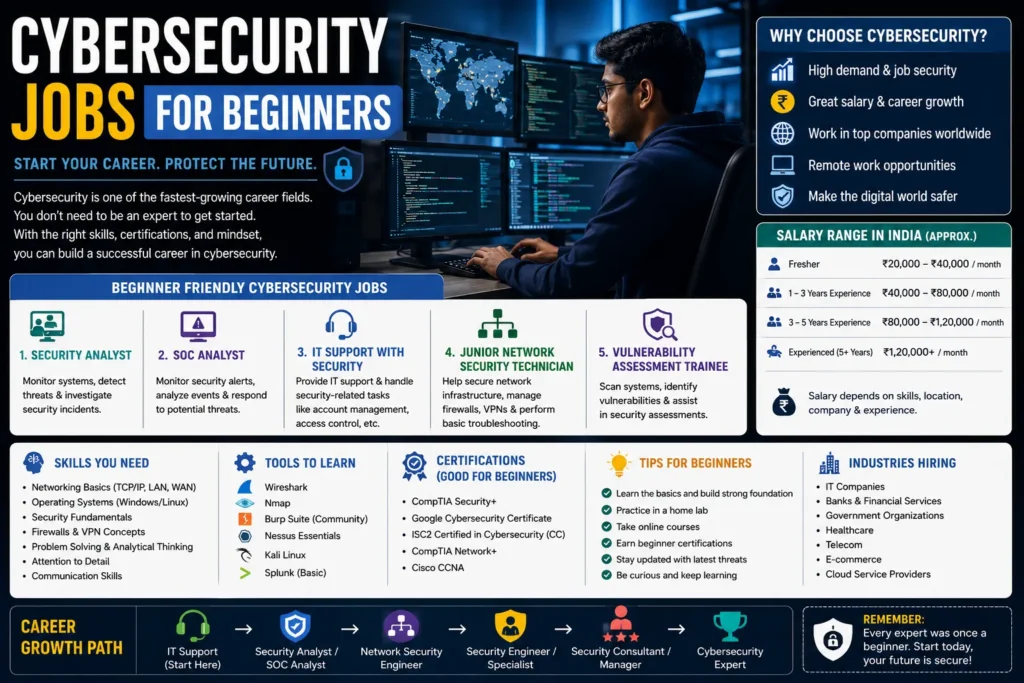
This guide explains beginner cybersecurity jobs, required skills, salary expectations, and future career opportunities.
What is Cybersecurity?
Cybersecurity involves protecting computers, networks, applications, and data from cyber threats such as hacking, malware, phishing attacks, ransomware, and unauthorized access.
Organizations use cybersecurity professionals to secure their systems, identify vulnerabilities, and respond to security incidents.
Why Choose Cybersecurity as a Career?
Cybersecurity offers several advantages:
- High demand across industries
- Competitive salaries
- Opportunities for remote work
- Continuous learning and career growth
- Global job opportunities
- Strong long-term job security
As cyber threats continue to evolve, skilled professionals remain valuable in the job market.
Beginner-Friendly Cybersecurity Jobs
1. Security Analyst
Security analysts monitor systems and investigate suspicious activities.
Responsibilities:
- Reviewing security alerts
- Monitoring network traffic
- Investigating potential threats
- Assisting with incident response
2. SOC Analyst (Security Operations Center Analyst)
A SOC analyst works in a security operations center and monitors cybersecurity events.
Responsibilities:
- Monitoring security tools
- Investigating alerts
- Reporting incidents
- Escalating serious threats
This is one of the most common entry-level cybersecurity jobs.
3. IT Support with Security Responsibilities
Many professionals start in IT support and gradually move into cybersecurity.
Responsibilities:
- User account management
- Password resets
- Basic security checks
- Endpoint protection support
This path provides valuable technical experience.
4. Junior Network Security Technician
These professionals help secure network infrastructure.
Responsibilities:
- Firewall monitoring
- VPN management
- Network troubleshooting
- Security policy implementation
5. Vulnerability Assessment Trainee
Beginners can assist senior security professionals in identifying security weaknesses.
Responsibilities:
- Running vulnerability scans
- Reviewing reports
- Documenting findings
- Supporting remediation efforts
Real-World Insight
Many cybersecurity professionals do not start as ethical hackers.
A common path looks like:
IT Support → Network Administrator → Security Analyst → Cybersecurity Specialist
Understanding networking, operating systems, and troubleshooting often provides a stronger foundation than immediately focusing on hacking tools.
Skills Required for Cybersecurity Beginners
Technical Skills
- Basic networking concepts
- TCP/IP fundamentals
- Operating systems (Windows and Linux)
- Understanding of firewalls
- Security fundamentals
- Password and authentication concepts
Soft Skills
- Problem-solving
- Attention to detail
- Communication
- Analytical thinking
- Continuous learning mindset
Tools Beginners Should Learn
Popular cybersecurity tools include:
- Wireshark
- Nmap
- Burp Suite Community Edition
- Nessus Essentials
- Kali Linux
- Microsoft Defender
- Splunk (basic level)
Understanding how these tools work can improve employability.
Education & Certifications
A degree can help, but it is not always required.
Useful Certifications
- CompTIA Security+
- Google Cybersecurity Certificate
- ISC2 Certified in Cybersecurity (CC)
- CompTIA Network+
- Cisco CCNA
Certifications combined with practical skills are highly valued by employers.
Beginner Cybersecurity Salary in India
Salary varies depending on skills, certifications, and location.
Average Salary Range
- Fresher: ₹20,000 – ₹40,000 per month
- 1–3 Years Experience: ₹40,000 – ₹80,000 per month
- Experienced Professionals: ₹1,00,000+ per month possible
Major technology cities often offer higher salaries.
Industries Hiring Cybersecurity Professionals
Cybersecurity jobs are available in:
- IT companies
- Banks and financial institutions
- Government organizations
- Healthcare sector
- Telecom companies
- Cloud service providers
- E-commerce businesses
Almost every industry that uses digital systems requires cybersecurity support.
Challenges in Cybersecurity Careers
This field offers excellent opportunities but also requires dedication.
Common challenges include:
- Continuous learning requirements
- Rapidly changing technology
- Incident response pressure
- Keeping up with emerging threats
Cybersecurity rewards professionals who enjoy solving problems and learning new skills.
Future Scope of Cybersecurity
The future of cybersecurity looks extremely strong due to:
- Cloud computing growth
- Artificial intelligence adoption
- Remote work environments
- Expansion of digital services
- Increasing cybercrime activities
Organizations are investing heavily in cybersecurity infrastructure and talent.
Tips for Beginners
- Learn networking fundamentals first
- Build a home lab for practice
- Learn Linux basics
- Practice with free cybersecurity platforms
- Earn beginner certifications
- Focus on understanding concepts rather than memorization
Practical skills are often more valuable than theoretical knowledge alone.
Frequently Asked Questions
Is cybersecurity a good career for beginners?
Yes. There are many entry-level roles available for individuals willing to learn networking, operating systems, and security fundamentals.
Do I need coding to start cybersecurity?
No. Basic scripting knowledge helps later, but many beginner roles do not require advanced programming skills.
Can I enter cybersecurity without a degree?
Yes. Certifications, practical projects, and technical skills can help build a cybersecurity career.
Which certification is best for beginners?
CompTIA Security+, ISC2 Certified in Cybersecurity (CC), and Google Cybersecurity Certificate are popular beginner options.
Conclusion
Cybersecurity offers excellent opportunities for beginners willing to develop technical skills and practical experience. Entry-level positions such as SOC Analyst, Security Analyst, and IT Support with security responsibilities provide strong starting points for long-term career growth.
As digital systems continue expanding worldwide, cybersecurity professionals will remain in high demand, making this one of the most promising technology careers available today.