Electrician jobs are among the most important skilled trades in India. From homes and offices to factories and large commercial buildings, electricians play a key role in installing, repairing, and maintaining electrical systems.
With rapid urban development, increasing construction projects, and rising demand for electrical infrastructure, skilled electricians are needed across residential, commercial, and industrial sectors.
For people looking for a practical, skill-based career with stable income and long-term opportunities, becoming an electrician can be a strong option.
What Does an Electrician Do?
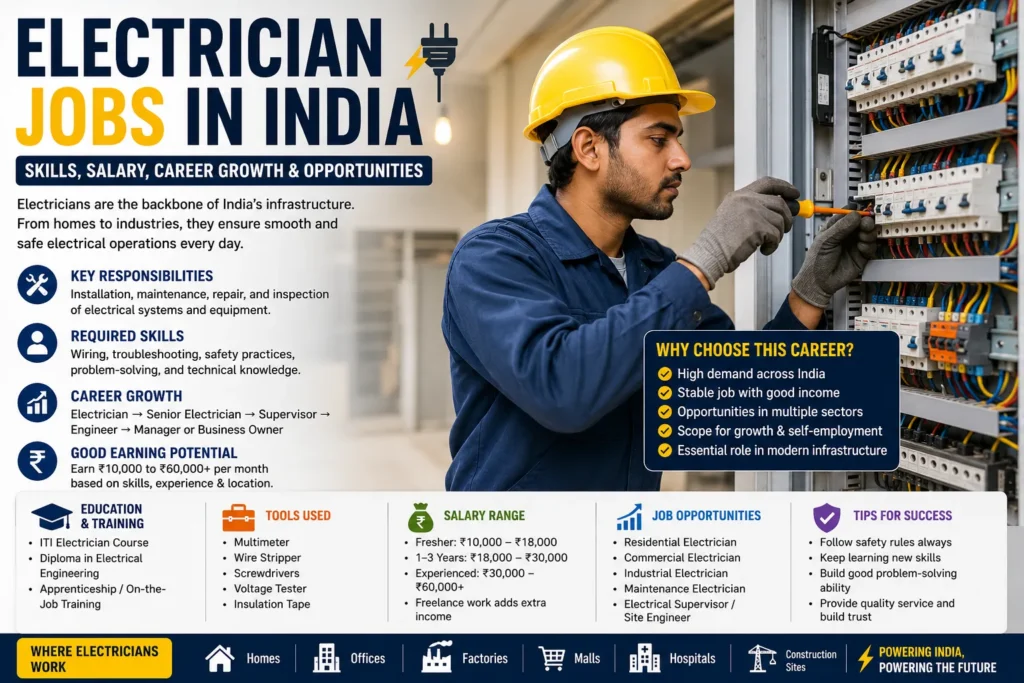
An electrician is responsible for working with electrical wiring, circuits, equipment, and power systems.
Common Responsibilities:
- Installing electrical wiring and switches
- Repairing electrical faults and short circuits
- Maintaining electrical panels and systems
- Reading wiring diagrams and layouts
- Installing fans, lights, inverters, and appliances
- Ensuring electrical safety standards are followed
- Testing voltage and electrical connections
Electricians may work in homes, offices, construction sites, factories, shopping malls, and industrial plants.
Real-World Work Insights (Important)
In actual field work, electricians often face:
- Short circuit and overload issues
- Loose wiring causing power failure
- Voltage fluctuation problems
- Emergency repair calls during outages
- Unsafe or outdated electrical installations
Experienced electricians earn more because they can quickly identify and solve complex electrical problems.
Types of Electrician Jobs
1. Residential Electrician
Works in homes and apartments handling wiring, lighting, fans, and electrical repairs.
2. Commercial Electrician
Handles offices, malls, hotels, and commercial buildings with larger electrical systems.
3. Industrial Electrician
Works in factories and industrial plants dealing with heavy machinery and power systems.
4. Maintenance Electrician
Responsible for regular inspection and maintenance of electrical systems.
Skills Required for Electrician Jobs
To become a successful electrician, you need:
- Basic electrical knowledge
- Wiring and circuit understanding
- Problem-solving ability
- Safety awareness
- Ability to use electrical tools
- Physical stamina for field work
- Attention to detail
Useful Technical Skills:
- Reading electrical diagrams
- Understanding load distribution
- Working with meters and testing devices
- Basic troubleshooting
Tools Used by Electricians
Electricians commonly use:
- Multimeter
- Wire stripper
- Voltage tester
- Screwdrivers and pliers
- Drilling machine
- Insulation tape
- Safety gloves and helmets
Education & Training
You do not always need a college degree, but proper training is very important.
Common Training Options:
- ITI Electrician Course
- Diploma in Electrical Engineering
- Apprenticeship under experienced electrician
- Short-term electrical repair courses
Practical experience matters more than theoretical knowledge in this field.
Electrician Salary in India
Salary depends on experience, location, and specialization.
Average Salary:
- Fresher: ₹10,000 – ₹18,000/month
- 1–3 Years Experience: ₹18,000 – ₹30,000/month
- Experienced Electrician: ₹30,000 – ₹60,000+/month
Freelance Earnings:
Many electricians earn additional income through private work.
- Fan installation: ₹200 – ₹500
- House wiring: ₹5,000 – ₹50,000+
- Inverter installation: ₹1,000 – ₹5,000
👉 Skilled electricians in metro cities often earn significantly more.
Career Growth Opportunities
With experience, electricians can grow into:
- Senior Electrician
- Electrical Supervisor
- Site Engineer
- Maintenance Manager
- Industrial Electrical Specialist
Some professionals also start their own electrical service business.
Demand for Electricians in India
The demand for electricians is increasing because of:
- Rapid urban construction
- Smart homes and automation systems
- Growth of industries and factories
- Solar energy installations
- Expansion of commercial infrastructure
Electricians with modern skills and safety knowledge are highly valued.
Challenges in Electrician Jobs
Electrician work also comes with challenges:
- Working in heat or outdoor conditions
- Risk of electrical shock
- Emergency repair situations
- Physically demanding work
- Need for continuous learning
Proper safety training is extremely important.
Future Scope of Electrician Careers
The future of electrician jobs in India looks strong due to:
- Rising electricity demand
- Growth in renewable energy projects
- EV charging infrastructure
- Smart building technology
- Industrial expansion
Electricians who learn modern systems and energy-efficient technologies will have better career opportunities.
Tips for Aspiring Electricians
- Learn proper electrical safety
- Gain hands-on practical experience
- Improve troubleshooting skills
- Stay updated with modern technologies
- Build trust and good customer service
👉 Reliable electricians often get repeat clients and referrals.
FAQs
Is electrician a good career in India?
Yes, electrician jobs offer stable demand, practical work opportunities, and good earning potential.
Can I become an electrician without a degree?
Yes, many electricians start through ITI courses or apprenticeships.
How long does it take to learn electrician work?
Basic skills can be learned within 6–12 months with practical training.
Can electricians earn through freelance work?
Yes, many electricians earn extra income from private installations and repair work.
Conclusion
Electrician jobs in India provide strong career opportunities for people interested in practical and technical work. With proper training, safety knowledge, and hands-on experience, electricians can build stable careers and even start their own businesses.
As India continues to expand its infrastructure and energy systems, skilled electricians will remain in high demand across residential, commercial, and industrial sectors.
Written by: TechVistaHub Editorial Team
Expertise: Skill-Based Career & Technical Industry Research
Disclaimer: This article is for informational purposes only. Salary, responsibilities, and opportunities may vary depending on location, employer, and experience.