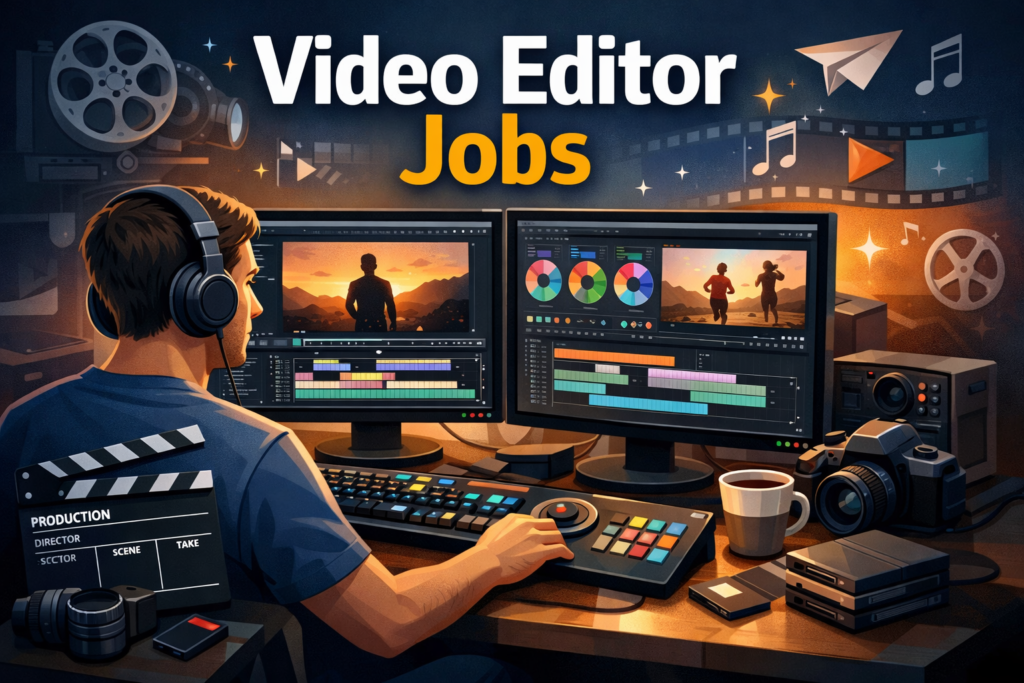

Video Editor Jobs – Skills, Salary, and Career Opportunities
Video editing has emerged as a vital part of digital media, advertising, and entertainment. This guide provides a comprehensive overview of video editor jobs, required skills, software knowledge, career progression, and salary prospects in India.
1. Introduction: The Growing Importance of Video Editing
Video content dominates the digital landscape, from YouTube and Instagram Reels to online advertisements and corporate presentations. Video editors are essential for producing high-quality, engaging, and professional content that captures audience attention. With the surge in online platforms, streaming services, and social media marketing, demand for skilled video editors in India has increased rapidly.
Video editing is not just about cutting clips; it involves storytelling, enhancing visuals, adding effects, and ensuring the final content communicates the intended message effectively. This career is suitable for creative individuals with an eye for detail and technical expertise.
2. What Does a Video Editor Do?
A Video Editor is responsible for assembling raw footage into polished content, maintaining narrative flow, and meeting project objectives. Typical responsibilities include:
- Reviewing and organizing raw footage for projects.
- Cutting and trimming clips to create a coherent storyline.
- Adding transitions, visual effects, graphics, and animations.
- Incorporating audio tracks, voiceovers, and sound effects.
- Collaborating with directors, content creators, or marketing teams.
- Ensuring the final video meets technical specifications for various platforms.
Video editors may work on corporate videos, advertisements, short films, YouTube content, music videos, or educational content. Each project type requires unique creative and technical skills.
3. Key Skills Required
Video editing requires a combination of technical and creative skills. Core competencies include:
- Software Proficiency: Knowledge of Adobe Premiere Pro, Final Cut Pro, DaVinci Resolve, After Effects, or Avid Media Composer.
- Storytelling: Ability to structure clips into a coherent and engaging narrative.
- Audio Editing: Synchronizing soundtracks, adjusting levels, and removing noise.
- Color Grading: Adjusting visuals to enhance mood, tone, and visual aesthetics.
- Attention to Detail: Spotting inconsistencies, errors, or timing issues in footage.
- Time Management: Delivering high-quality projects within tight deadlines.
- Team Collaboration: Communicating effectively with directors, producers, and creative teams.
4. Educational Qualifications
While formal degrees are not always mandatory, most employers prefer candidates with qualifications in:
- Film or Media Studies
- Mass Communication or Journalism
- Animation and Multimedia
- Visual Arts or Graphic Design
Specialized diploma or certification courses in video editing and post-production software enhance employability and practical knowledge.
5. Job Roles and Responsibilities
Video editor roles can differ based on the industry or project type. Some common positions include:
5.1 Corporate Video Editor
Handles marketing, training, and promotional videos for companies. Requires understanding of brand guidelines and business communication.
5.2 YouTube/Content Creator Editor
Works with individual creators or influencers to edit online content for social media platforms.
5.3 Film and Television Editor
Involves post-production for films, TV shows, or streaming series. Requires advanced knowledge of storytelling and editing software.
5.4 Motion Graphics Editor
Focuses on animation, visual effects, and graphic integration into video content.
5.5 Freelance Video Editor
Works on a project basis for multiple clients across industries, offering flexibility and varied experience.
6. Salary Expectations in India
Video Editor salaries vary depending on experience, location, and industry. Approximate ranges include:
- Entry-level (0-2 years): ₹15,000 – ₹30,000 per month
- Mid-level (2-5 years): ₹30,000 – ₹60,000 per month
- Senior-level (5+ years): ₹60,000 – ₹1,20,000 per month
- Freelancers: ₹10,000 – ₹50,000 per project depending on scale
Industries such as advertising, film, television, and digital content platforms generally offer higher salaries compared to small-scale production studios.
7. Career Growth Opportunities
Video editors have several career paths for advancement:
- Senior Video Editor or Lead Editor
- Post-Production Supervisor
- Motion Graphics Designer or Visual Effects Specialist
- Director of Photography or Film Editor
- Freelance Content Creator / YouTube Specialist
Those who continuously update skills with emerging software and trends can transition into leadership roles in post-production or digital media companies.
8. Tools and Software Commonly Used
Video editing requires familiarity with various tools for different tasks:
- Adobe Premiere Pro – Primary editing and assembly
- Final Cut Pro – Professional Mac-based editing
- DaVinci Resolve – Color grading and editing
- Adobe After Effects – Motion graphics and visual effects
- Audacity or Adobe Audition – Audio editing
- Filmora or Camtasia – Beginner-friendly platforms for short content
Proficiency in multiple platforms increases versatility and opportunities in different projects.
9. Freelancing vs Full-Time Employment
Video editors can choose between full-time employment and freelancing based on career goals:
- Full-time offers a fixed salary, benefits, and structured projects.
- Freelancing allows flexibility, diverse projects, and potentially higher earnings per project.
- Freelancers must manage clients, deadlines, and self-promotion effectively.
Both paths require strong portfolios and proof of editing skills.
10. Industry Demand and Trends
Video editors are in high demand due to:
- Explosion of digital content platforms like YouTube, Instagram, and OTT services
- Increased need for corporate and promotional videos
- Growth in online learning, webinars, and video marketing
- Integration of AI tools for editing and automation
Trends include vertical video editing for social media, short-form content, motion graphics integration, and collaborative editing tools for remote teams.
11. Tips for Aspiring Video Editors
- Build a portfolio of personal or mock projects.
- Master at least one primary editing software and learn secondary tools.
- Follow trends in online content creation and social media platforms.
- Take certifications and online courses to improve technical skills.
- Network with creators, studios, and agencies for opportunities.
Consistency, creativity, and technical proficiency are key to a successful career in video editing.
12. Challenges in the Role
Video editing can be demanding due to:
- Tight deadlines and client expectations
- High attention to detail and long editing hours
- Constant learning to adapt to new software updates and trends
- Collaboration and feedback from multiple stakeholders
Developing patience, adaptability, and organizational skills helps professionals navigate these challenges successfully.
13. Conclusion
Video Editor jobs are increasingly vital in India’s digital content ecosystem. With creativity, technical skills, and an understanding of storytelling, professionals can build rewarding careers across industries such as digital marketing, film, television, corporate communication, and social media content creation.
Continuous learning, proficiency in advanced tools, and adaptability to trends are essential for long-term success. Whether full-time or freelance, video editing offers dynamic, engaging, and financially viable career opportunities for creative professionals.
Disclaimer: This article is for informational purposes only. Salary, skills, and job responsibilities may vary by employer, location, and industry standards. Verify details with certified courses and official job listings before applying.