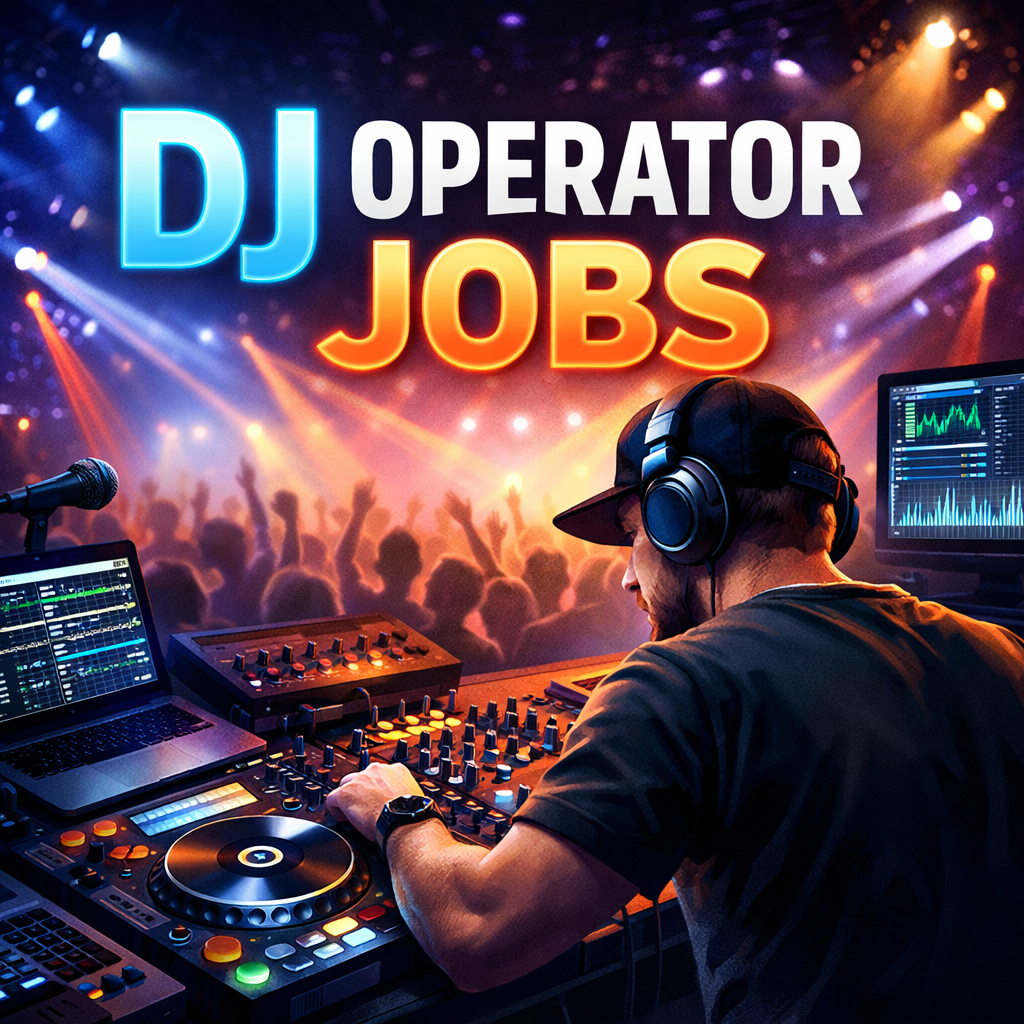

DJ Operator Jobs – Skills, Equipment, and Career Opportunities
DJ operators are an integral part of the entertainment and event industry. This guide covers DJ Operator jobs, key skills, equipment knowledge, salary, and career prospects in India.
1. Introduction: The Role of a DJ Operator
DJ Operators, also known as disc jockeys, are responsible for mixing and playing music at events, parties, clubs, or live shows. They create an engaging atmosphere, manage playlists, and ensure the audience enjoys a seamless audio experience. With the rise of music festivals, corporate events, and nightlife culture in India, DJ Operators have become highly sought-after professionals.
The role requires creativity, technical skills, and an understanding of audience preferences. DJ Operators combine music selection, beat-matching, sound mixing, and live performance skills to deliver a unique entertainment experience.
2. Responsibilities of a DJ Operator
DJ Operators perform various tasks depending on the type of event or venue. Common responsibilities include:
- Creating and managing playlists suitable for the audience and event type.
- Mixing and blending tracks seamlessly using professional DJ equipment.
- Adjusting audio levels and sound quality for live performance.
- Engaging the audience and reading the crowd to maintain energy.
- Collaborating with event organizers, lighting technicians, and other performers.
- Maintaining and troubleshooting DJ equipment, speakers, and audio software.
DJ Operators must combine technical knowledge with creativity to ensure each performance is memorable.
3. Skills Required for DJ Operators
Successful DJ Operators require a combination of musical talent, technical proficiency, and interpersonal skills:
- Music Knowledge: Understanding genres, beats, rhythms, and popular tracks.
- Technical Skills: Proficiency with turntables, mixers, controllers, and software like Serato, Rekordbox, or Traktor.
- Creativity: Ability to mix tracks, create remixes, and adapt music to audience preferences.
- Audio Engineering: Understanding sound levels, equalizers, and speaker systems.
- Communication Skills: Interacting with clients, organizers, and audiences professionally.
- Time Management: Planning sets, coordinating with event schedules, and handling multiple tasks efficiently.
- Adaptability: Reading the crowd and adjusting music style or tempo accordingly.
4. Educational and Certification Requirements
While formal education is not always required, DJ Operators benefit from training and certification courses. Relevant paths include:
- Diplomas or certifications in DJing, Music Production, or Audio Engineering.
- Short-term courses in electronic music, live mixing, and sound management.
- Workshops and online courses offered by professional DJs and music institutes.
Practical experience, internships, or volunteering at events can also help in building a strong career portfolio.
5. Equipment Knowledge for DJ Operators
DJ Operators work with a variety of audio equipment. Familiarity with these tools is crucial:
- Turntables and CDJs for mixing and playing tracks
- Mixer consoles for controlling audio levels and transitions
- DJ controllers and software for digital mixing
- Headphones for cueing and monitoring tracks
- Speakers, amplifiers, and PA systems for live sound
- Lighting and effects systems for enhanced event experience
Maintaining and troubleshooting equipment ensures smooth performances.
6. Types of DJ Operator Jobs
DJ Operators can specialize in different areas based on interests and opportunities:
6.1 Club DJ
Performs in nightclubs, bars, and lounges. Requires understanding of dance music and audience interaction.
6.2 Event DJ
Works at weddings, corporate events, private parties, and cultural festivals. Focuses on diverse music selection for different audiences.
6.3 Radio DJ
Hosts radio shows, curates playlists, and engages listeners through commentary and music.
6.4 Mobile DJ
Operates with portable equipment for outdoor events, birthday parties, or school/college events.
6.5 Producer DJ
Creates original music tracks, remixes, and collaborates with other artists or record labels.
7. Salary Expectations in India
DJ Operator salaries vary depending on experience, location, and type of events. Approximate ranges include:
- Entry-level (0-2 years): ₹15,000 – ₹30,000 per month
- Mid-level (2-5 years): ₹30,000 – ₹60,000 per month
- Experienced DJs: ₹60,000 – ₹1,50,000+ per month depending on event scale and popularity
- Freelance DJs: ₹10,000 – ₹1,00,000 per event depending on duration and type of event
Metro cities and event hubs like Mumbai, Bengaluru, Delhi, and Goa typically offer higher earnings due to high demand for entertainment professionals.
8. Career Growth Opportunities
DJ Operators can advance their careers by exploring multiple paths:
- Resident DJ at clubs, resorts, or hotels
- Event production and management roles
- Music production, remixing, or studio recording
- DJ Trainer or Mentor for aspiring DJs
- Brand collaborations and sponsorships for high-profile DJs
Building a personal brand and online presence can significantly enhance career growth opportunities.
9. Skills to Stand Out in the Industry
- Developing a unique style and music identity
- Learning audio production and digital music creation
- Networking with event organizers, clubs, and online communities
- Understanding music trends, audience preferences, and cultural diversity
- Marketing oneself on social media platforms and music streaming services
10. Challenges in the Role
DJ Operators face certain challenges:
- Managing long working hours and late-night events
- Handling high-pressure environments during live performances
- Keeping up with evolving music trends and technology
- Competition in a crowded entertainment industry
- Traveling frequently for events or gigs
Strong planning, adaptability, and passion for music are essential to overcome these challenges.
11. Tips for Aspiring DJ Operators
- Learn music mixing, beatmatching, and DJ software through professional courses.
- Practice regularly and build a personal playlist for different event types.
- Invest in quality equipment and maintain it regularly.
- Attend events, network with other DJs, and participate in competitions.
- Create an online presence through social media, YouTube, or music streaming platforms.
12. Future of DJ Operators in India
The DJ industry in India is expanding due to the growing entertainment sector, music festivals, club culture, and corporate events. Technological advancements in music software, digital instruments, and sound systems have enhanced the scope of DJing as a professional career. DJs who combine creativity with technical expertise are expected to have long-term career stability and opportunities in both live and online music production.
13. Conclusion
DJ Operator jobs offer an exciting career in the entertainment and events industry. With the right skills, equipment knowledge, and audience understanding, professionals can create engaging musical experiences while exploring multiple career paths. From live events and club performances to online streaming and music production, the opportunities for DJs in India are expanding rapidly. Continuous learning, networking, and staying updated with music trends are essential for success in this dynamic field.
Disclaimer: This article is for informational purposes only. Salary, responsibilities, and job requirements may vary depending on employer, location, and event scale. Always verify details with official sources before applying or investing in courses.