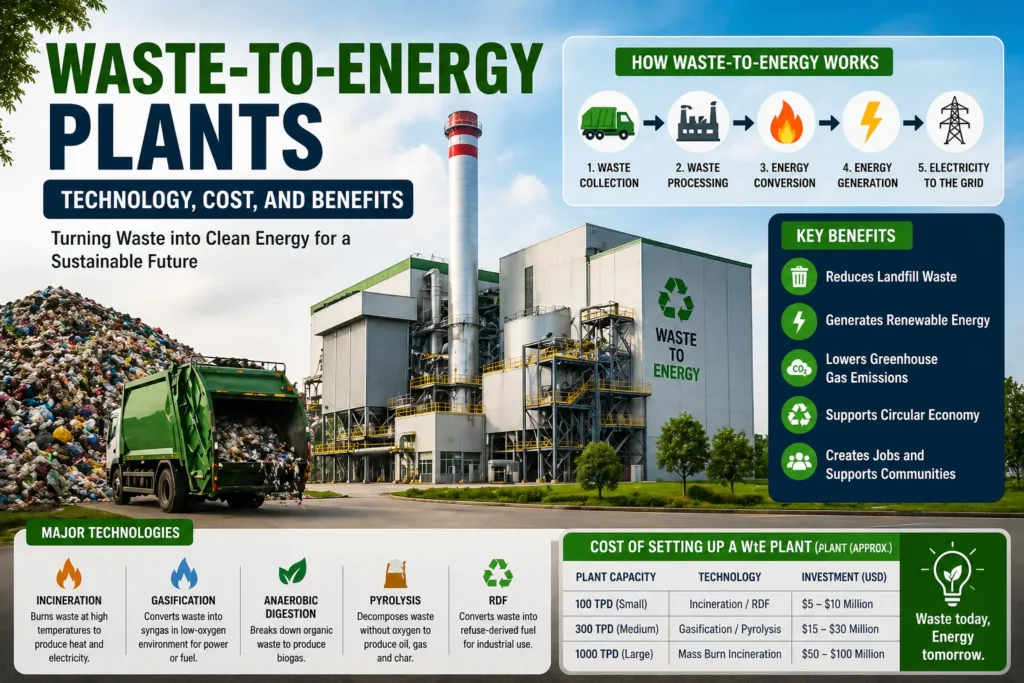
Waste-to-Energy (WtE) plants convert non-recyclable waste into electricity, heat, or fuel. As waste generation increases rapidly in India and across the world, these plants offer a practical solution to reduce landfill pressure while generating usable energy.
Instead of dumping waste, WtE technology helps extract value from it—making it an important part of modern waste management systems.
What is Waste-to-Energy?
Waste-to-Energy refers to technologies that convert solid waste into usable energy forms such as:
- Electricity
- Heat
- Biogas or fuel
It mainly uses non-recyclable waste like plastics, paper, organic waste, and industrial residues.
🇮🇳 Ground Reality in India
In India, one of the biggest challenges for WtE plants is poor waste segregation.
- Mixed waste reduces energy efficiency
- High moisture content lowers calorific value
- Improper collection systems affect plant performance
Because of this, many WtE plants struggle to operate at full capacity despite strong demand.
Also Read: AC Technician Jobs – Skills, Responsibilities, and Career Opportunities
Major Waste-to-Energy Technologies
1. Incineration (Most Common)
Waste is burned at high temperatures (850–1100°C) to produce steam, which generates electricity.
2. Gasification
Waste is converted into syngas (fuel gas) in a low-oxygen environment, which can be used for power or fuel.
3. Pyrolysis
Thermal decomposition without oxygen produces:
- Bio-oil
- Gas
- Char
Used mainly for plastic and rubber waste.
4. Anaerobic Digestion
Organic waste is broken down by bacteria to produce biogas (methane).
5. Refuse-Derived Fuel (RDF)
Waste is processed into fuel pellets and used in industries like cement plants.
How a Waste-to-Energy Plant Works
Step-by-step process:
- Waste collection from cities or industries
- Segregation (removal of metals, glass, etc.)
- Shredding and drying
- Conversion (burning or biological process)
- Energy generation (electricity/heat)
- Emission control using filters
- Ash handling and disposal
Cost of Setting Up a WtE Plant
Approximate investment:
- Small Plant (100 TPD): $5 – $10 million
- Medium Plant (300 TPD): $15 – $30 million
- Large Plant (1000+ TPD): $50 – $100 million
Additional Costs:
- Land and infrastructure
- Waste transportation
- Pollution control systems
Also Read: Waste-to-Energy Plants: Technology, Cost, and Benefits
Revenue Sources
WtE plants earn through:
- Electricity sales
- Government tipping fees
- Sale of recovered metals
- Carbon credits
Benefits of Waste-to-Energy
- Reduces landfill waste (up to 90%)
- Generates renewable energy
- Reduces methane emissions
- Supports circular economy
- Creates employment opportunities
Challenges of WtE Plants
- High initial investment
- Public concerns about pollution
- Need for consistent waste quality
- Complex government approvals
Key Data
- India generates ~160,000 tonnes of waste per day
- Only 20–25% is processed scientifically
- Remaining waste mostly goes to landfills
👉 This creates huge opportunity for WtE expansion.
Real-World Examples
- Okhla WtE Plant (Delhi) – Generates ~16 MW power
- Shenzhen Plant (China) – One of the world’s largest (5000 TPD capacity)
- Spittelau Plant (Austria) – Supplies district heating
Future of Waste-to-Energy
The future of WtE is evolving with:
- AI-based plant monitoring
- Smart waste segregation systems
- Carbon capture technology
- Integration with solar and renewable grids
India is expected to expand WtE projects under Smart City and Clean India initiatives.
Practical Insight
For WtE to succeed in India:
- Waste segregation must improve at source
- Public awareness is necessary
- Strong policy support is required
Without these, plant efficiency will remain limited.
FAQs
Is Waste-to-Energy safe for the environment?
Modern plants use advanced filters and emission control systems, making them relatively safe when properly managed.
Is WtE profitable in India?
Yes, but profitability depends on waste quality, government support, and plant efficiency.
Can WtE replace landfills completely?
No, but it can significantly reduce landfill dependency.
Conclusion
Waste-to-Energy plants offer a practical solution to two major problems—waste management and energy generation. While challenges exist, especially in countries like India, improving infrastructure and policy support can unlock massive potential in this sector.
WtE is not just a technology—it’s a step toward a cleaner and more sustainable future.
Disclaimer: This article is for informational purposes only. Costs, regulations, and performance may vary by region and project.